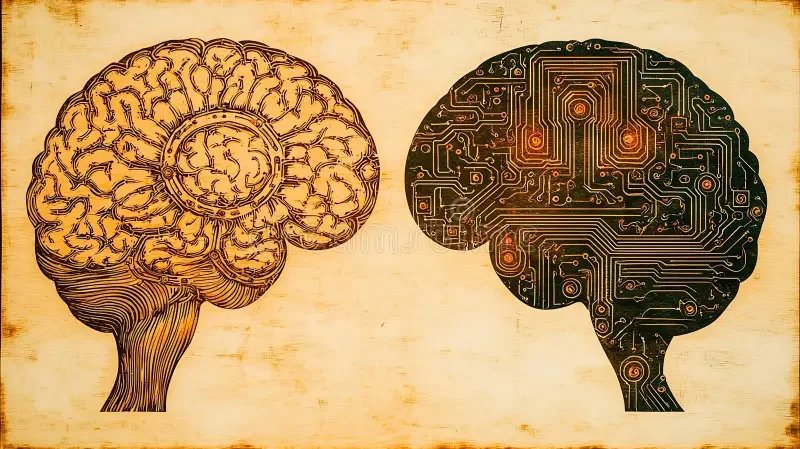
AI is a tool not a weapon to kill creativity.
Artificial intelligence is often misunderstood. AI should not be viewed as a weapon that destroys creativity. Instead, it is a tool that can support and expand what humans are already capable of creating. This is important to think about, even though it may not seem that way at first.
Generative AI, refers to technology that can create content that was once only possible for humans to make. This includes videos, images, written documents, computer code, music, and even full applications. While the quality of AI-generated content can vary, it still raises a major question in society. That question is whether AI means the end of human creativity. Many people believe it does, but others do not, which leads to disagreement.
Many artists are worried that AI will take their jobs or replace their peers. This concern is especially strong in industries like gaming and film. In both of these industries, 3D animators and designers are required to create characters, objects, and environments. After that, they animate these models so stories can be shown easier. AI has already shown that it can create detailed 3D models that are fully rigged with everything that an animator needs for a specific character. AI can generate animations and videos, which has been seen with OpenAI’s Sora. Because of this, the fear artists have can be validated, even if it may be exaggerated.
However, even with these advancements, it is highly unlikely that AI will fully replace animators and 3D designers. This is because creativity still requires human decision-making and a general idea of what someone wants as an outcome. AI can help speed up certain steps, but it cannot fully understand emotion or storytelling in the same way people do. So while AI exists, human workers will still be needed. In a slightly different way, AI may actually help these industries instead of hurting them.
For example, AI could reduce the cost of making a game or movie. This would allow developers to spend more time fixing bugs and improving gameplay. In movies, lower production costs could mean more focus on story quality and character development. This might not seem connected, but better tools often lead to better results. Therefore, AI could indirectly improve creative projects.
Interestingly enough, many professionals in the creative industry agree with this idea. Jeff Katzenberg, a well-known film producer, once said, “I think as a creative tool, think of that as a new form. A new paintbrush or a new camera has so much opportunity around it.” Cameras did not end painting, and computers did not end hand-drawn animation. In the same way, AI is meant to increase productivity and reduce the time spent on repetitive tasks, although it may not feel like that right now.
Moving away from movies for a moment, generative AI can also help other industries. One industry that will benefit greatly is construction. Creating blueprints for buildings can take months and cost hundreds of thousands of dollars depending on the project. With AI, designers can create a basic layout much faster. After that, human experts can review the design and add important details like electrical wiring and plumbing. This may sound simple, but it can save a lot of time.
In housing construction, especially for custom homes, 3D models are often shown to homeowners. These models help people understand scale and design choices. Normally, creating these models takes weeks and costs a few hundred dollars. However, AI can assist designers by speeding up the modeling process. While designers are still needed, AI can make their work faster and more efficient, which is useful.
In conclusion, AI is not the enemy of creativity many make it out to be, even though it is sometimes treated that way. It is a tool that can support creative professionals instead of replacing them. While AI may change how work is done or how work flows, it does not remove the need for imagination or human qualities. Creativity does not disappear when new tools or methods appear. Instead, it changes, even if the process becomes a little awkward at times.
Written by Ethan rose